As I write this, it has been 4 days since I left the apartment. 119 hours. Today, every action is a decision based on effort and return.
Ever since my August reboot, things haven't gotten particularly better. My symptoms keep creeping in like uninvited guests tinkling around in the kitchen before I wake up. I close my eyes and ignore the obvious before a sigh and a grunt signalling to the body that it's time to get out of bed.
As I write this, it has been 4 days since I left the apartment. 119 hours. I keep track of it on my Home Assistant app, to push myself to go out more often.
I never thought that automating lights and heating would be so important when I was setting up Home Assistant during the COVID lockdowns. I could still walk fairly easily, get up ladders and kneel to pick up things. Today, every action is a decision based on effort and return.
And this month, I looked at the 3 areas of my life.
Teaching is giving me a good return, not just as meaningful work but also as a healthy social interaction and a good battleground to test what I have been researching and learning about AI.
Consulting work has been turning a nice page. Clients, old and new, have been asking for guidance on how to implement AI agents and not just tools or finished products. (I hate teaching people how to press buttons on tools and apps; because those come and go fast and then we're back at square one.)
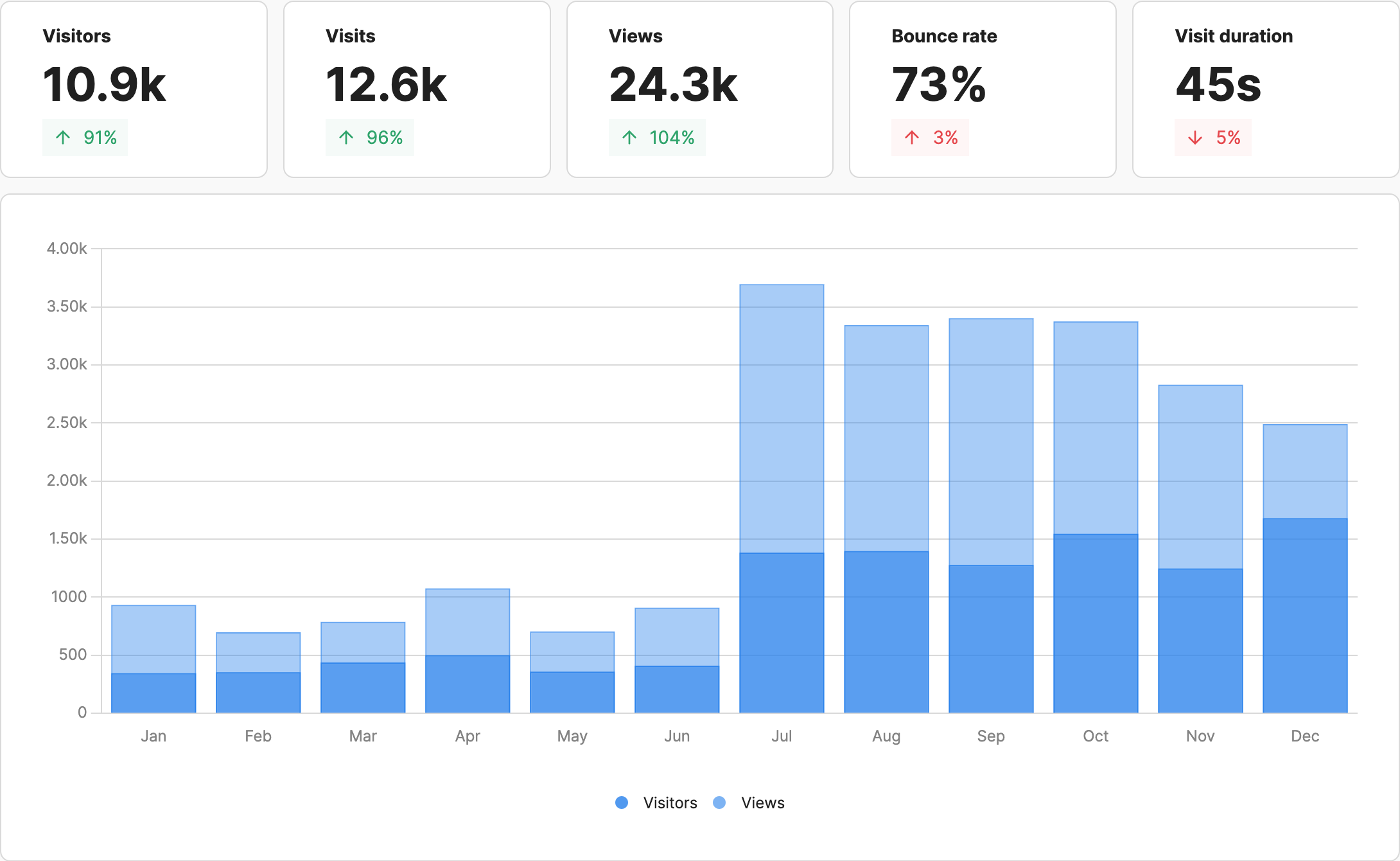
The Gregory-MS Project also made a good splash around the web, with an increase of 91% more visitors in 2025 compared to the previous year. This was mostly due to me being much more active on LinkedIn, bullying researchers and doctors to visit the website and subscribe to the free weekly digests of relevant research.
Some unexpected friends and supporters also suddenly appeared, making the work feel a bit less lonesome.
Gregory-MS even found a potential medication that can be repurposed for Progressive Multiple Sclerosis, Dihydroartemisinin. Half hopeful and half desperate, I found a way to test its effects. This breaking-bad experiment had to stop when my doctor saw the results from my blood work. Back to square one.
At this point, I have streamlined so much of my life that resisting and looking for a cure turned into a habit deprived of hope. Gregory-MS sends me alerts of new clinical trials, new relevant research, but it all feels like Sisyphus' work. I am not hopeful, I just don't know what else to do. So please refrain from being inspired by someone who is just going through the motions of their own prison.
Everybody likes innovation, until they see pineapple on pizza
There is potential in GregoryAi. With proper guidance from those in the field, it can filter the noise of scientific research and break the communication silos that hinder innovation. The main obstacle is that even the MS project has failed to gather engaged supporters.
I don't know why this happens. Maybe it's the general distrust in AI; the lack of confidence in my skill; the poor communication of the value we can get from the system; Whichever the case, it feels weird to see so much apathy from people who toot so much about patient innovation.
From my experience, doctors love innovation as long as it comes in their own terms and from someone inside their own caste system. Fortunately there are exceptions.
With the guidance of three research groups, I am building a new version of Gregory-MS that will broaden the scope to all areas of brain regeneration. It should be online around the second half of February. It will include more areas, like Alzheimer's Disease, Cell reprogramming to induce brain tissue regeneration, Neuroimmune interactions, and the Central Nervous System — Blood and Peripheral Inflammation.
Like the MS version, the main goal is to help researchers. For patients, we will be adding the option to get notified of new clinical trials.
I don't know any other way
There are many types of luck; mostly we are lucky because we keep moving around to find opportunities. This is why the new brain-regeneration project is the only way I have found to deal with not knowing what the future holds.
It's not a step in the right direction, in the sense that it will directly improve my health and mobility. But it's something I can do, and it may topple the domino that triggers some exceptional discovery by someone else. It's a tiny step, but it's the only one I can make.
We do what we can, with what we have, in the moment we are at.
Comments ()