
Getting High on AI
I have been burning through my usage quota on Claude CoWork, fast.

Like any entry drug, I was just curious to know what all the fuss was about. Why would I need Claude Cowork when I can load a folder into Visual Studio Code with GitHub Copilot and ask any LLM for code that does what I want?
The benefits of using code for tasks are undeniable. You get the possibility to check the code for errors; it's an auditable magic spell. You can have that folder filled with the proper context for that task, with versions of previous work, you can add tools so that CoPilot can use other apps, you can give it Skills, and even tell it to learn a new skill by itself.
But everyone was talking about it; I got intrigued. This wasn't peer pressure. It was curiosity about the new shiny toy that I had laced with an abundant dose of dismissal for yet another tool.
I took a puff. I was so wrong.
Claude Cowork sits between the simplicity and limitations of the Chat, and the complexity of Visual Studio Code with Copilot. It's meant to handle one task at a time, but you can have two workspaces running at the same time. Each workspace has its collection of tools, skills, context documents, and AI Artefacts.
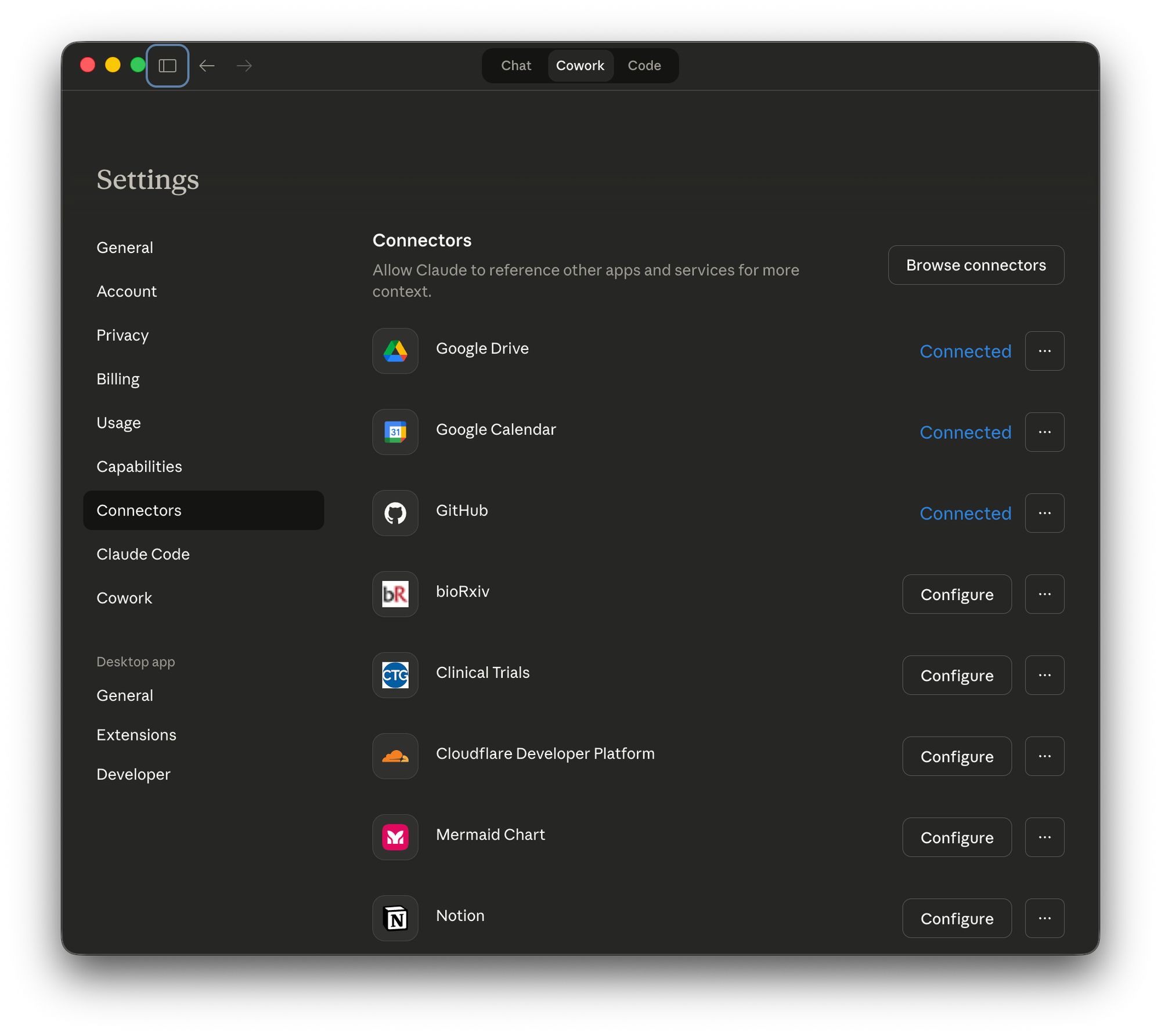
Unlike Coding agents, Cowork doesn't need you to know anything about code. It does require the same amount of clear instructions. And while coding tools will ask you for MCP servers, and API keys, Claude Cowork asks for "connectors" to be installed in the desktop app. Same thing, but polished.
"Alright, no friction in adding files for context or having to run scripts. Nice."
The turning point was asking it to gather some research for a menial task. Cowork searched the web, gathered the sites that met the criteria, created a Word document and an Excel spreadsheet so that I could take over from there.
The files listed 10 websites and filled in columns with specific information I had asked for. Category, Main Proposition, Primary Color, Secondary Color, Accent Color, Primary Font, Secondary Font, Screenshot Notes.
In a few minutes, I had a file that would have taken me an hour or more to fill in. I got hooked.
Pretty soon, I was pushing limits and ignoring the warning: "Cowork consumes your usage quota faster". Because it's not just about the messages it is streaming back at us, there is a lot of work behind the scenes.
It's doing a great job reading and producing Word documents with good formatting. And I noticed that before reading docx files, it will first convert them to markdown. For me this is great, all of my notes are text files written in that format.
"Let's give a slightly harder task"
When you start working on steroids you'll want more, or at least to see how far you can go.
I gave it an implementation question that I was trying to answer for a client, then went on to do something else. What I got back was all the technical information I needed with links back to the sources.
"Just one more..."
But the honeymoon period was gone. The lights had turned on in the disco. The band stopped playing. The party was over. "You've hit your limit · resets 8pm (UTC)"
Withdrawal symptoms and future doom
It is hard to go back once you have had a taste. Work is less draining when the AI takes over the menial tasks and delivers a result that is above what you would get from a trainee. I didn't have to click through search results, skim community forums for someone's post about the same problem, or even screenshot a bunch of pages.
I could jump straight to the deep work, and got hyped seeing how much could be done. Hitting the usage limit meant going back to side-by-side apps and my scratchpad, open tabs and downloaded files to sort out later. It was like using a calculator after trying an Excel Worksheet.
And there was a message taunting me. "Turn on extra usage to keep using Claude if you hit a limit." It was tempting, but I already had the experience of seeing my AI-bill grow. And while we still aren't at the enshitification stage of AI tools, we are already at the stage where they try to hook us. And they will succeed.
A friend was saying the other day, "I don't know why they don't just give everyone a free week with the Pro plan. It's so insanely better than the free version that everybody would sign up!"
The disparity between free and premium versions is real. We tried it in class, with students using the same prompt different models and different free/premium accounts. Most of the tests with free accounts gave us an output that felt like a nice try instead of a good effort. While the premium accounts were getting wow results.
This is a problem if we want to teach students from different socio-economic contexts how to use AI. And given the lack of general knowledge about AI, the info-exclusion chasm is bound to increase.
You're hooked, what now? — Tips to get a better high
Focus on one goal at a time. Unlike the chat version, Cowork does a better job at keeping focus. Decide on a clear end-result before starting a session, and don't reuse sessions.
Add a workfolder, it will allow you to see progress and even edit the files before passing them back to Claude.
Build your own set of skills.md, they can be both a competitive advantage and a time-saver.
Plug it in. There are plugins that we can add to a Cowork project. I am not sure how they differ from skills, but they are recommended to help get better outputs.
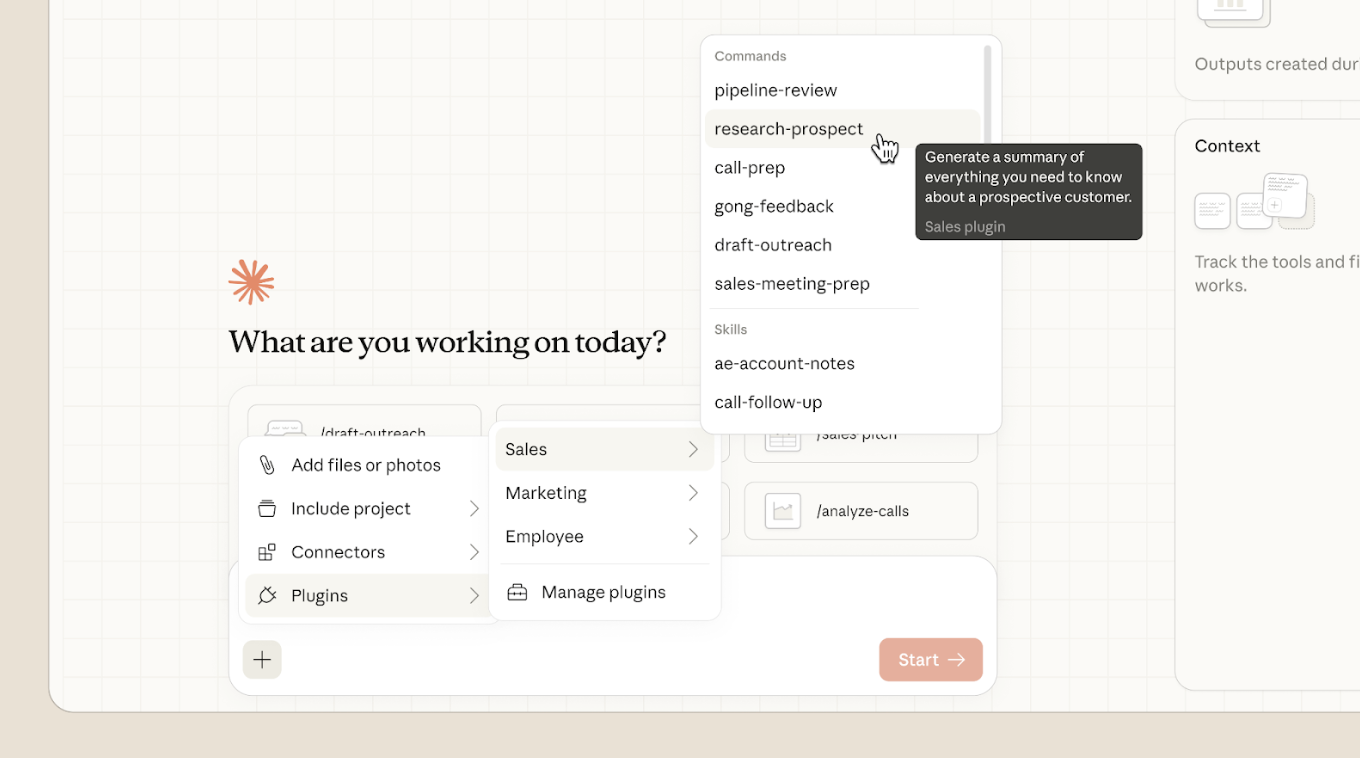
Good Coworkers follow instructions. Go to Settings → Cowork and add instructions that will be applied across your projects.
Start to rethink the way you work because this is just the beginning. The game changer here isn't just AI, but the way that Claude is positioning different technologies to accomplish tasks (without spending fortunes and months just trying to make their models better).
Claude Cowork is an agent that will work behind the scenes calling tools and opening websites to get things done autonomously. My belief is that what will separate us from each other is the way that we understand these AI agents, and coordinate them into a team. This leaves us with the task of validating the output, and coordinating different tasks instead of doing the actual work.



Comments ()