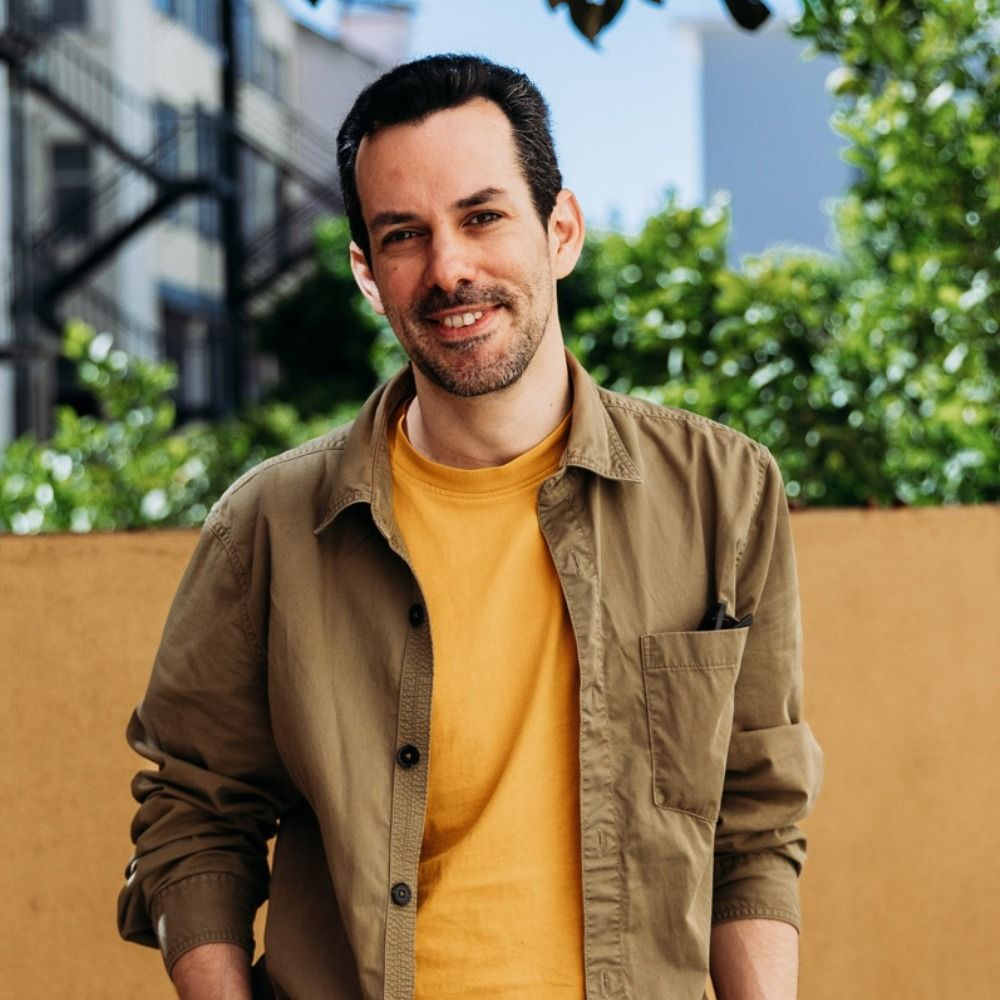
How AI is saving my life without magic spells
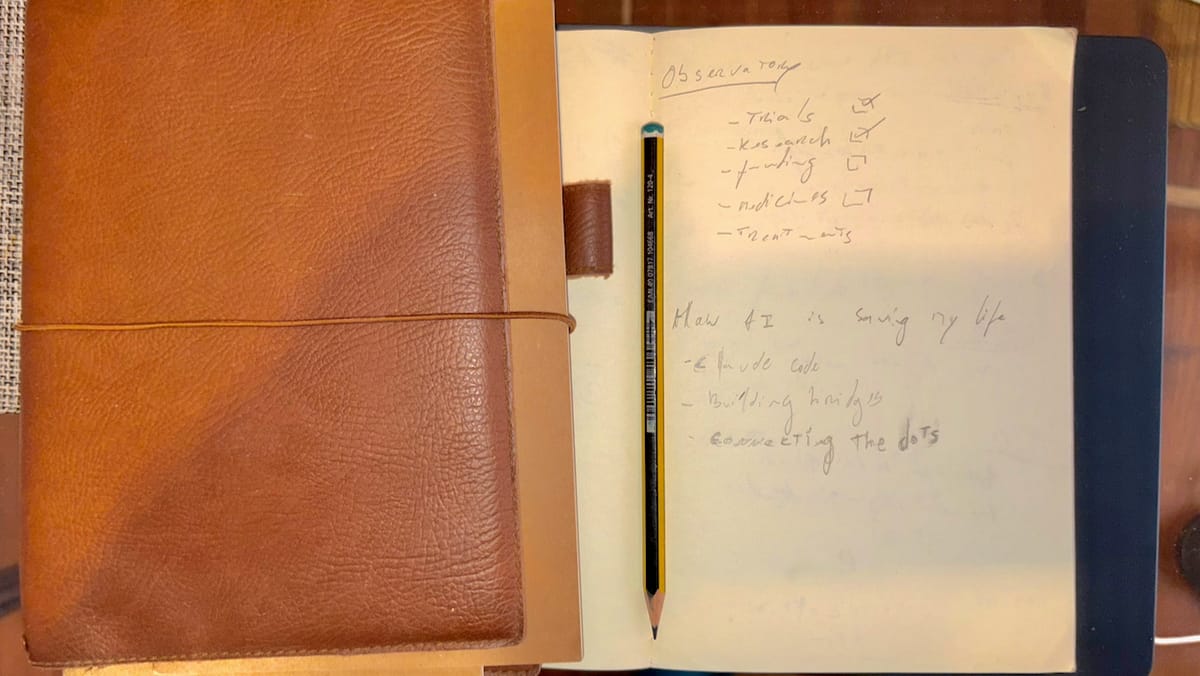
This kind of story isn't new, I know of at least two others. One is by Sid Sijbrandij, founder of GitLab, and his fight against cancer. The media picked up the story as being AI-driven, but Sid clarified that, explaining that ChatGPT served as an assistant for literature review and analysis, and it helped him ask better questions to specialists and pick where to put his time.
I took time to read the full story written by Elliot Hershberg, but Sid's own website has a richer, raw and unapologetic perspective that I can relate to. He goes all the way to share his full patient records.

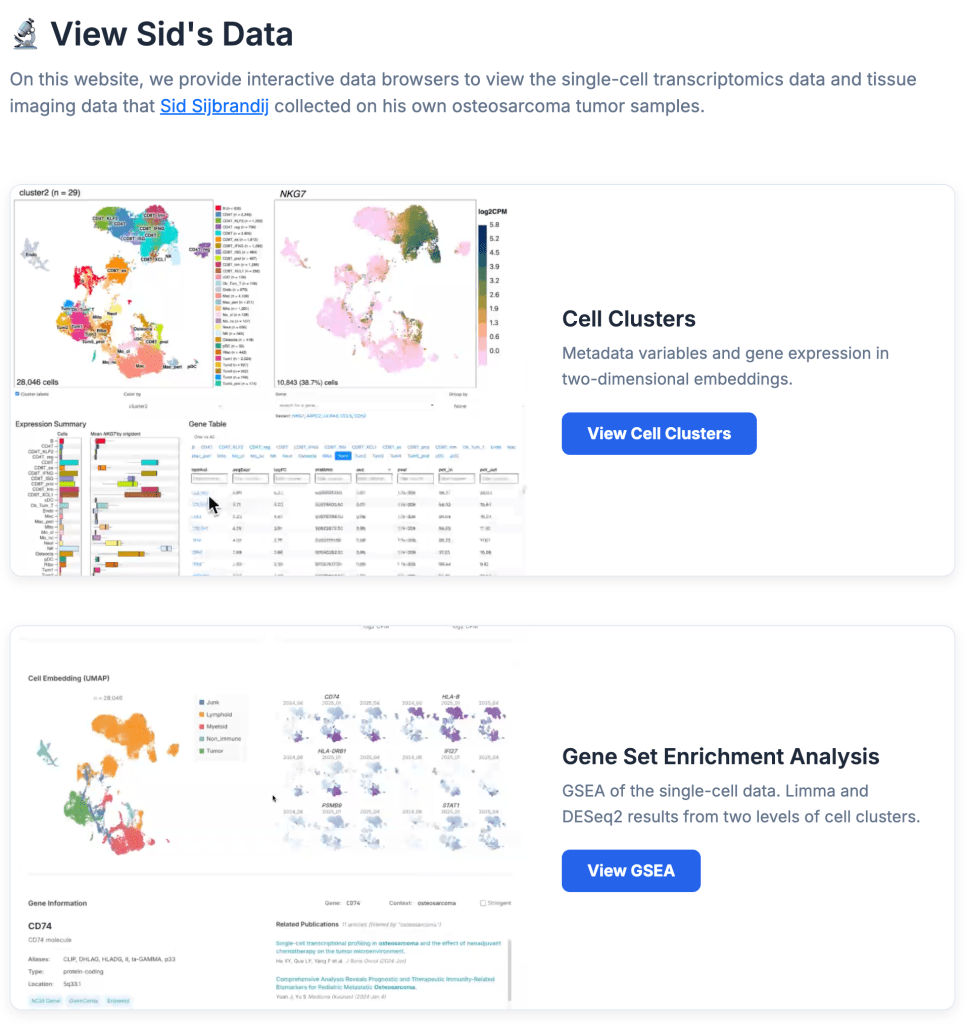
He calls this act of taking agency "going Founder Mode", I call it creating GregoryAi. And I don't have his level of resources, but I have friends that gave me an odd mix of skills, from programming to configuring servers and picking the best beer. It's weird how much you can learn from being on Slack 24/7, sharing memes and hazing each other.
And I have been meeting others dealing with Multiple Sclerosis (MS) or related disorders, patients, doctors, researchers. People who aren't at peace with how things are and who want to do something about it, the kind of people I like. I keep track of everyone and how they relate with each other.
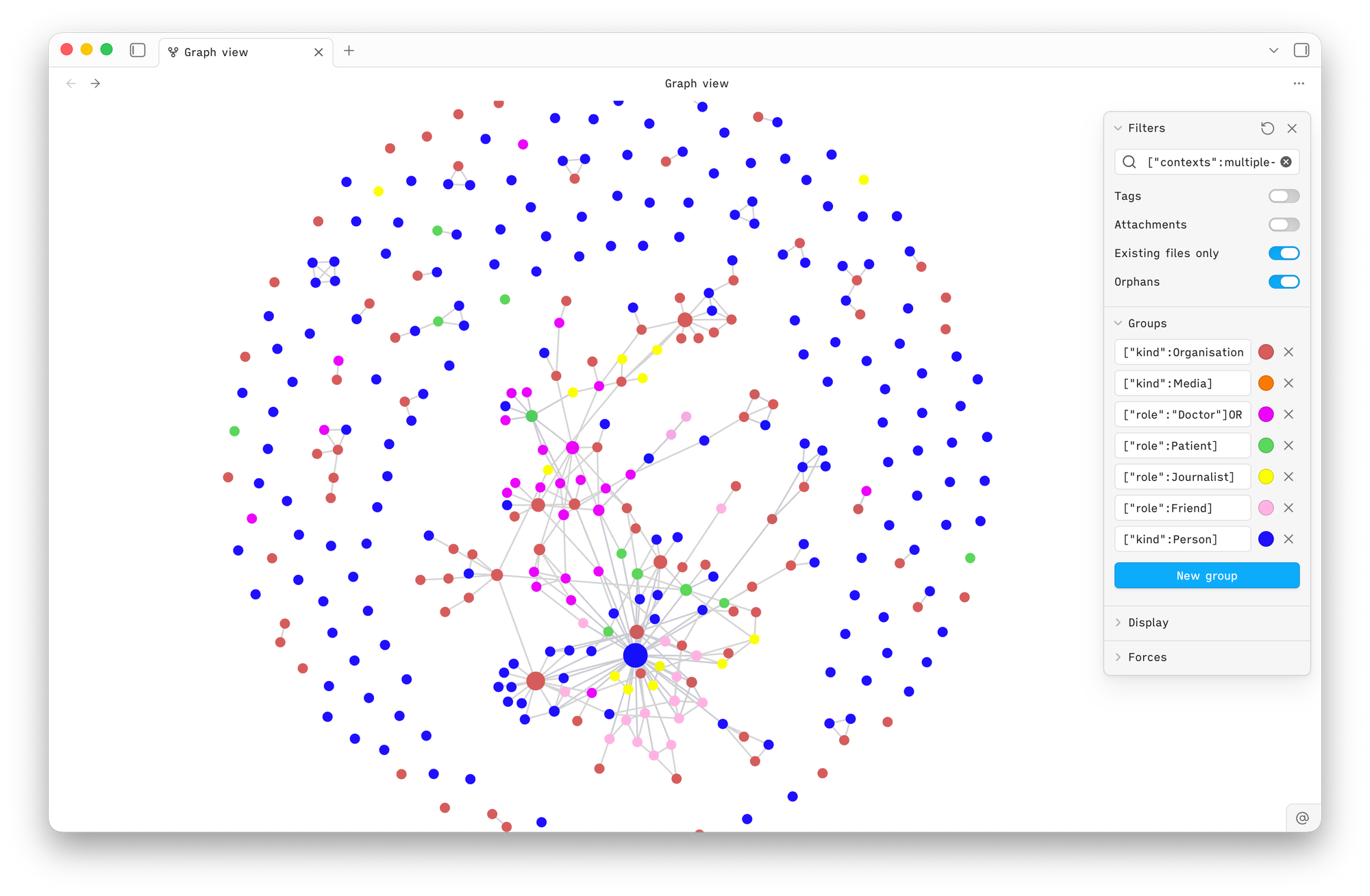
It's about connecting the dots to build bridges
I have been reaching out to people on LinkedIn and other Social Media using the age-old tactic of the shameless plug in comments and replies. I have stopped following people in PR, and now focus on Neurology. LinkedIn's algorithm understood the assignment and started working for me. But even still, Blue Sky is the best way to find people, in terms of effort-to-quality.
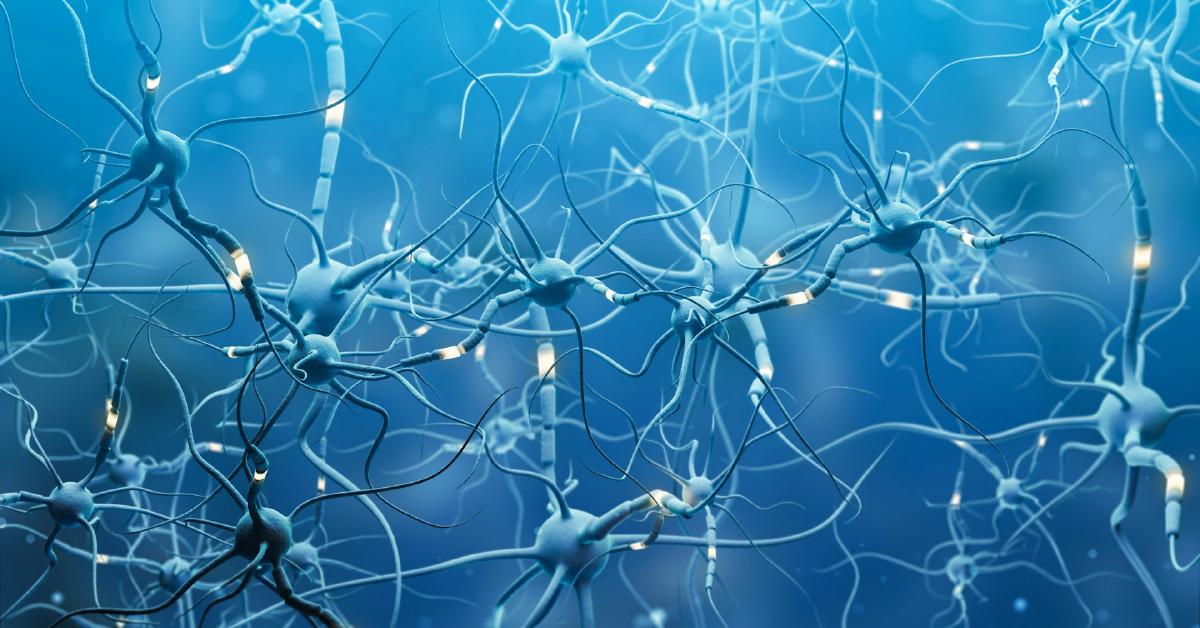
Hopping from node to node, I managed to find people working in research labs and willing to believe a stranger saying, "We can build the best knowledge hub for Brain Regeneration".
And we did. Brain-Regeneration.com has been running since April and fully replaced Gregory-MS.

This is a complete rebuild of what began six years ago. I used Claude to help with the design, which isn't great but works better than the previous one, and to develop the frontend and back-office system, which is now a hundred times better.
The new site can track any research subject and pull in the latest academic papers to pair them with clinical trials worldwide. It then sorts them out into categories, which can be medicines, treatments, or any research topic.
With this, we are tracking 3 conditions and 3 research areas, and there is room for more.
Conditions
Research Areas
Cell Reprogramming, led by Professor Lino Ferreira, focuses on triggering the brain to repair itself.
Neuroimmunometabolism, led by Professor Luca Peruzzotti-Jametti, studies how brain-immune interactions can bring new therapeutic approaches for MS and other disorders.
Neuroinflammation, led by Professor Adelaide Fernandes, researches the role of inflammation in the emergence or progression of neurodegenerative disorders.
The Brain Regeneration knowledge hub is focused on the frontlines of science, but I didn't forget about the patients. They can still use it to find the latest research about their medication to share with their doctors, and there are free alerts whenever there is a new clinical trial registered somewhere.
This is the place we built to bring people together. Now let me tell you how I am doing this and how much it can grow.
What AI actually does
Understanding the Science
I have been reading the abstracts of academic papers since 2021 and writing down what I don't know but feels important. Oligodendrocytes, Microglia, Myelin. I have a full dictionary of words that I have learned the hard way.
Finding a reliable source and writing my own definition with a link to the original isn't enough. Sometimes I double check what I found with what the AI produces, other times I use the AI app to manage my Obsidian Notes. Making these notes and finding the links between them is how I learn.
The end result is a whole glossary and graph of how these things relate. And I can create new notes that list a number of papers, linking to their authors, and sometimes showing relations that I missed.
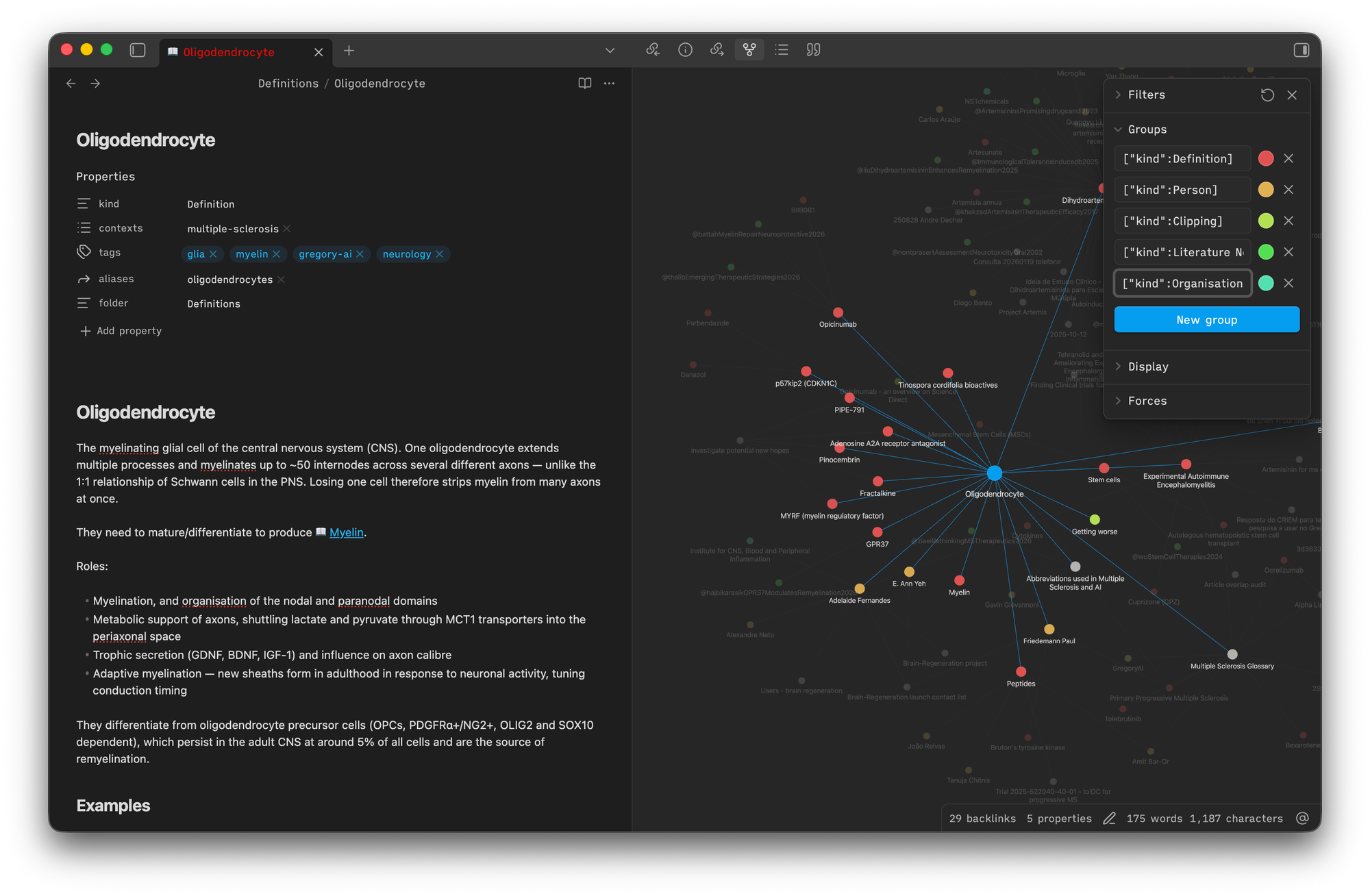
These are all text files that Claude or any other AI can search, read and edit. It's an external brain that I share with my AI tools. They help me manage information that I could never keep up to date on my own.
Finding what's really important
For my last neurology appointment, my doctor received a document with 14 potential hopes for myelin repair. This is infinitely better than reading an average of 1,240 new papers per month.
After fetching the new papers, GregoryAi runs 3 Machine Learning (ML) models to apply a relevancy score. Papers above 80% in each model show up immediately on the site and are posted on Blue Sky and Mastodon. Every two days I review the scores to fetch anything important that might have slipped.
Sometimes, something does slip through.
Dihydroartemisinin (DHA)
This was a medicine used to treat Malaria until the WHO took it off the market in favour of better alternatives. The title of one paper caught my eye and it scored above 80% in 2 of the ML models.
There were over 30 papers and even some that I had missed and had good scores from the ML algorithms. After checking with my doctor, I decided to include it as a category on Brain-Regeneration. This way we can all track any new papers or clinical trials.
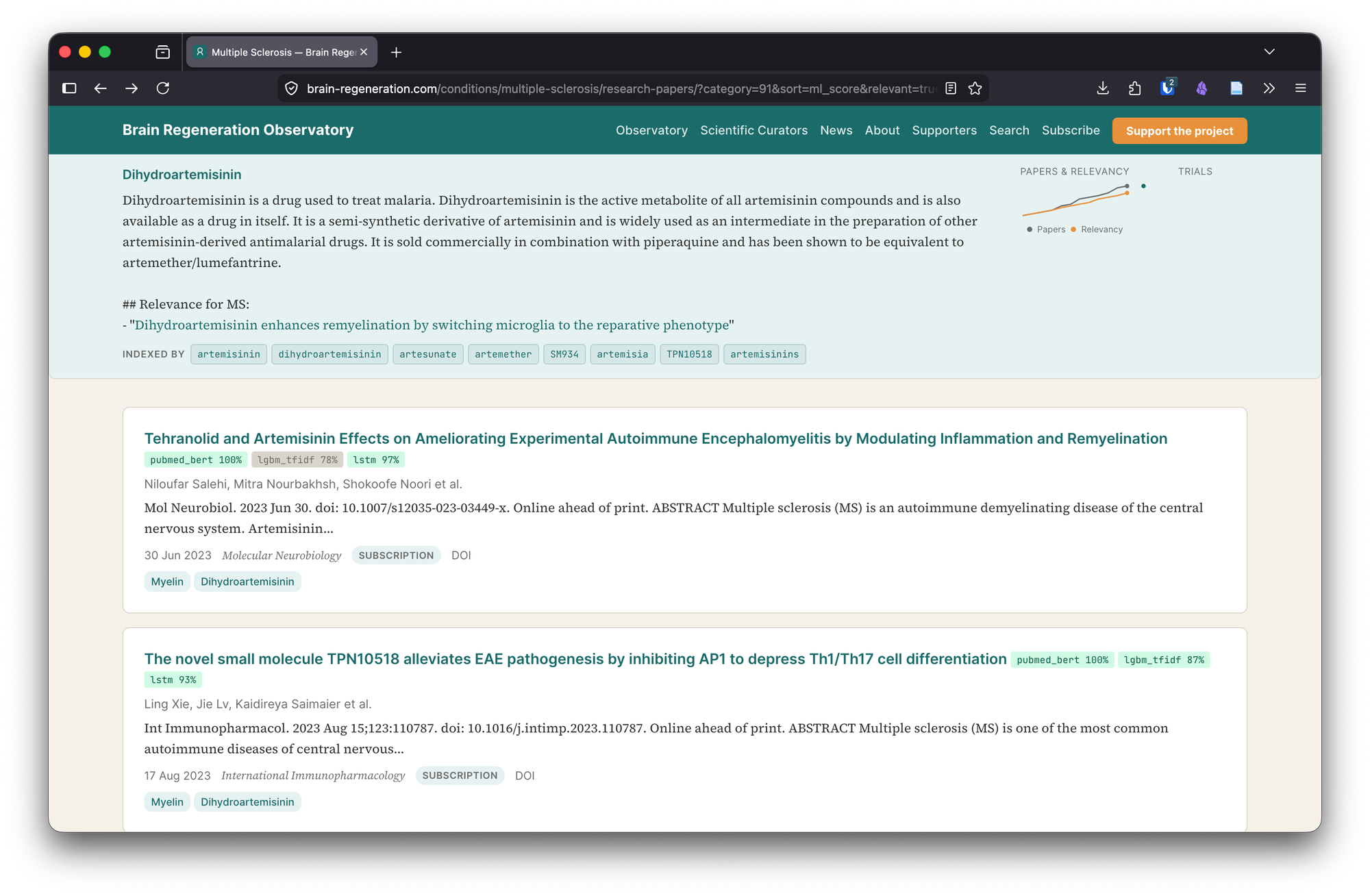
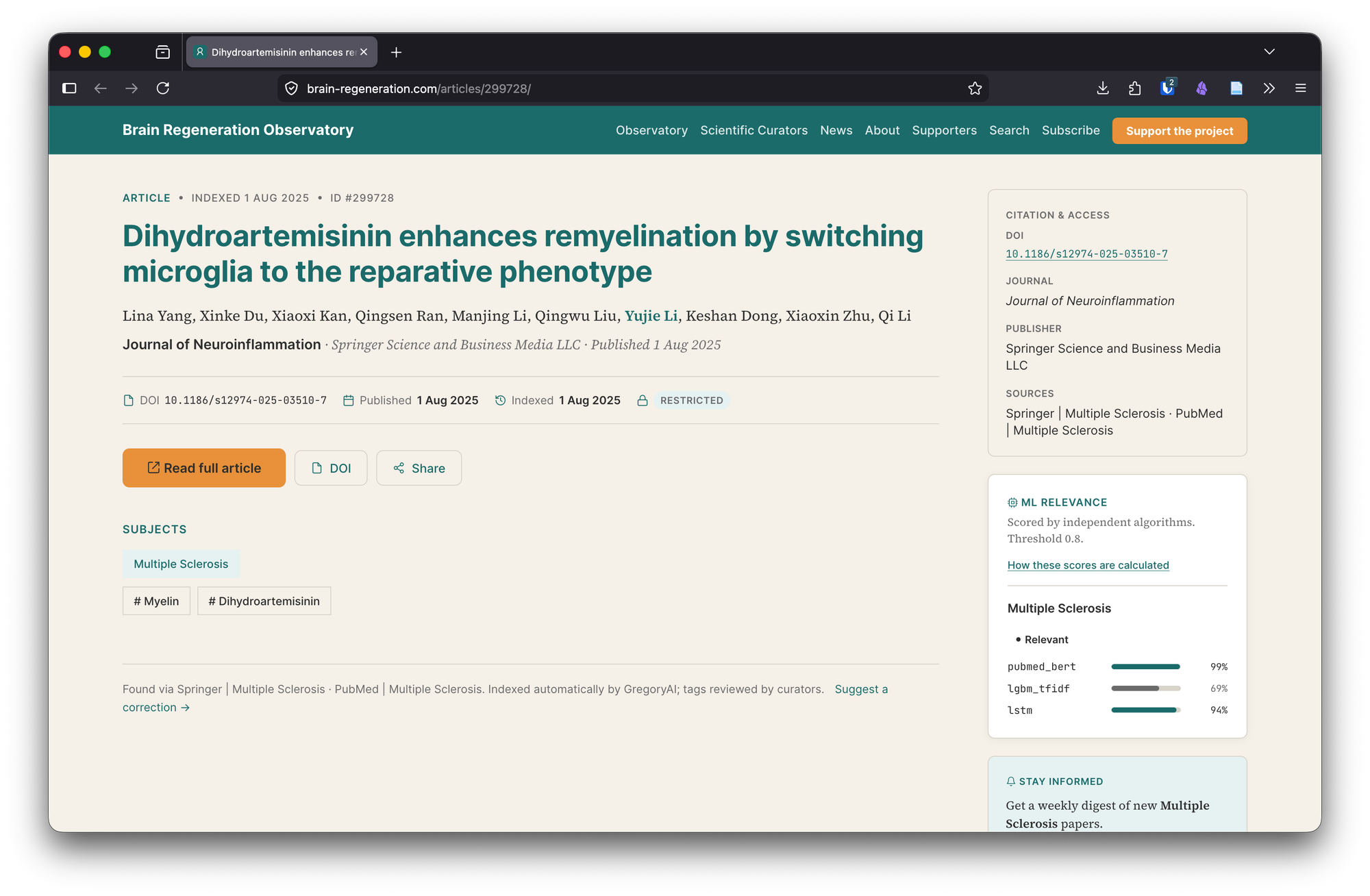
I have also been sharing this with other researchers. Even if the level of evidence is low, imagine the impact of finding a new use for a medicine that is sitting on a shelf somewhere. Something that could change so many lives for the better deserves a closer look.
Answering questions based on real data
Too much information is as bad as not enough. With nearly 50,000 articles indexed, I have a lot of questions that would require writing database queries or exporting tables to Excel.
My setup for Claude now includes a SKILL.md file with instructions on how to run searches on GregoryAi's database. These can be simple like the example below, or more complex: "what other papers have these three authors published in the last 12 months? And do they have other shared papers?"
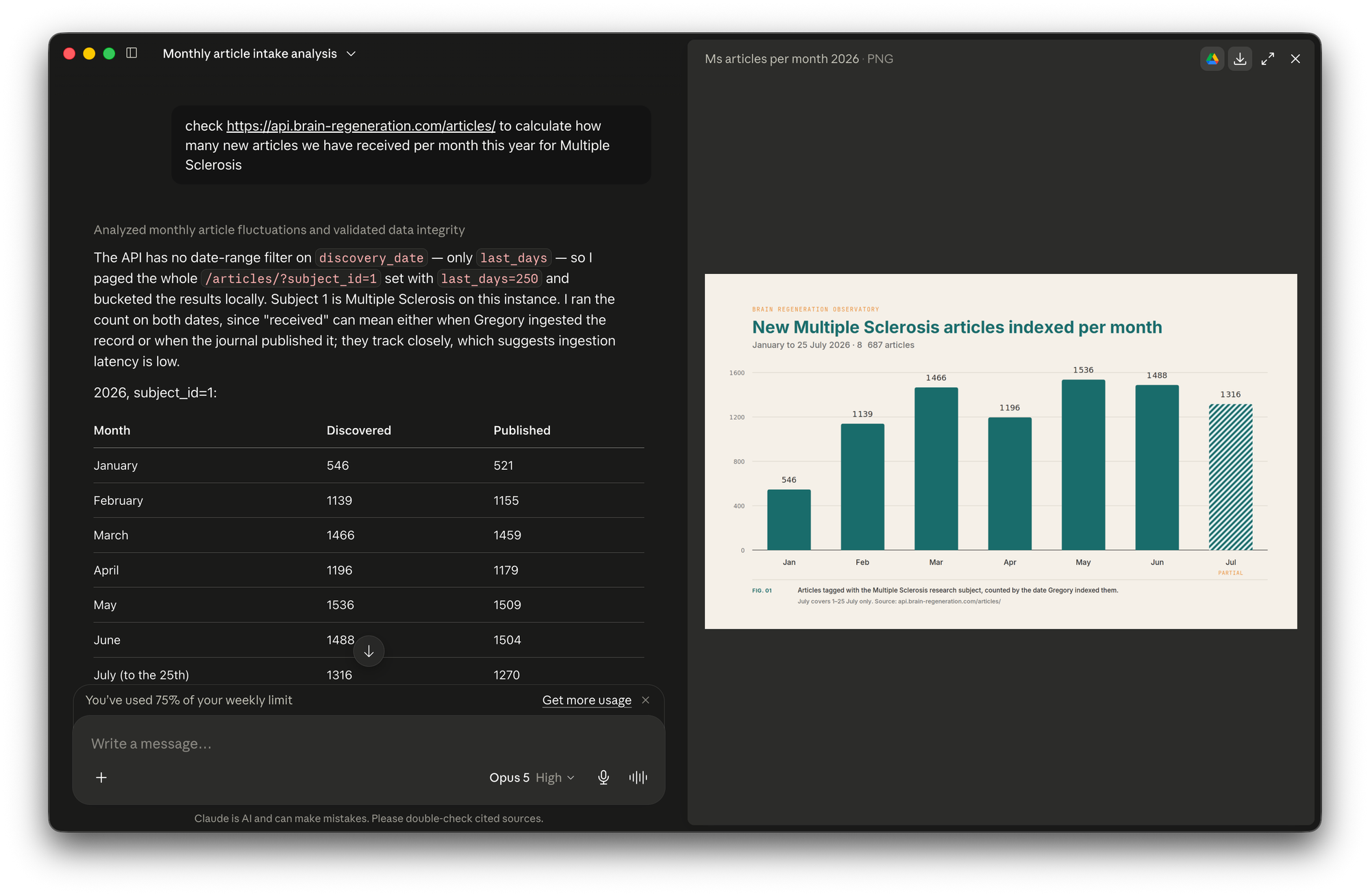
Good questions need good data
While Anthropic gave Pro users access to the Fable model, I used it to take a deep look into what we had for Clinical Trials. It identified a lot of problems in the raw data and suggested a number of normalisation strategies.
For countries, it created a table to make sense of the different way the 3 registries we track store that information. This lets anyone search for "MS trials in Portugal" (spoiler, there aren't many).
We then moved on to normalise trial phases. Values like "Phase i/ii", "phase 2","phase 1,phase 2" became "phase_2" or "phase_1_2" that was automatically reflected on the brain-regeneration site. We did the same for regions, recruitment phases, study type and a few others.
For information on trial sponsors, we created a workflow for human review before merging sponsors such as Peking Union Medical College and Peking Union Medical College Hospital.
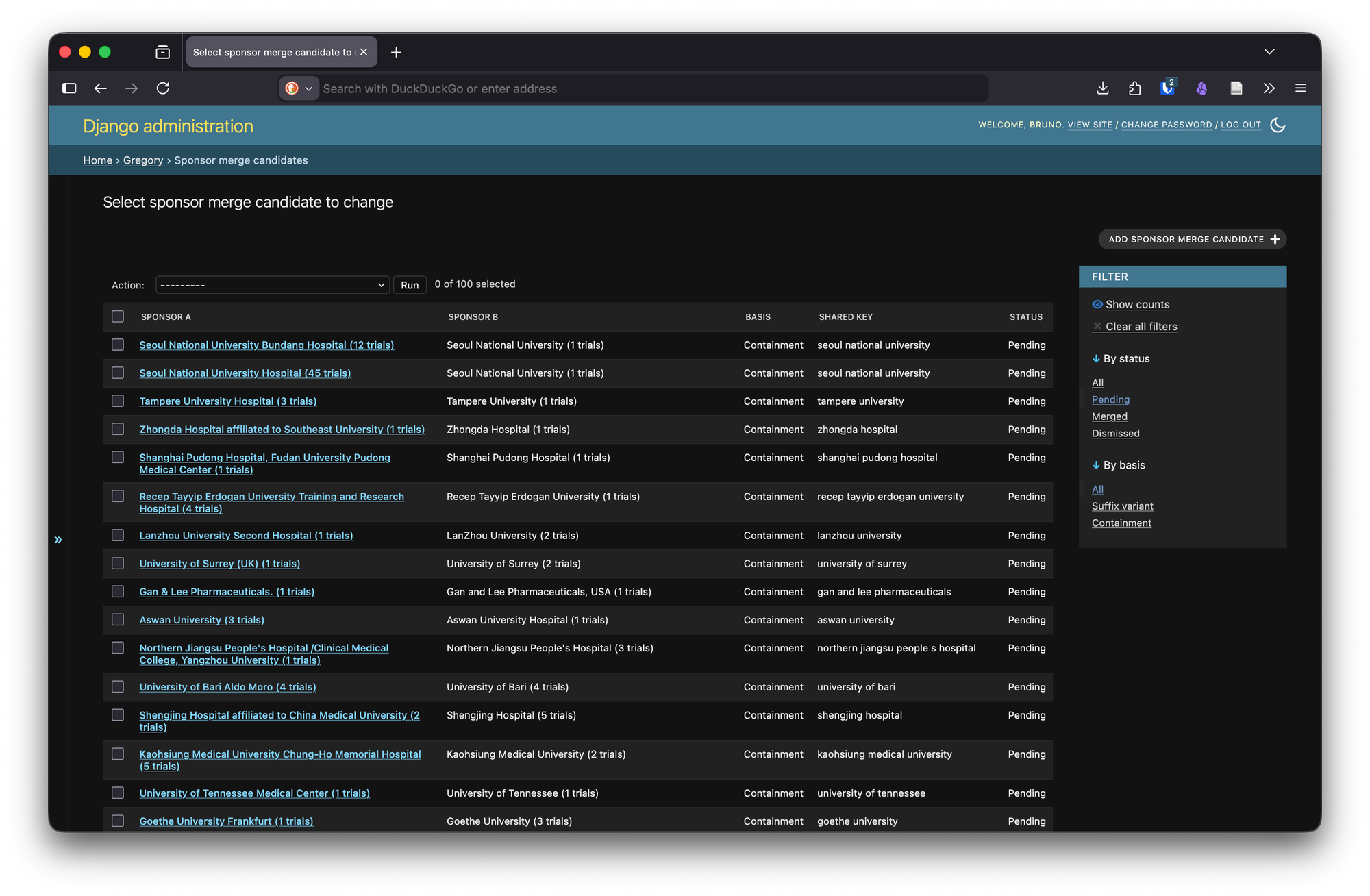
There may be some duplicates in the database, because it isn't easy to harmonise the data we get from the top three registries for clinical trials; ClinicalTrials.gov (CTG), European Clinical Trial Information System (CTIS), and the International Clinical Trial Registry Platform (ICTRP) of the World Health Organization.
Vibe Coding, adding method to madness
Claude helps me overcome my lack of coding skills using my experience as a Product Owner many times in the past, and what I learned about development workflows from work and the Lobsters.
First step was to clean the house. Before going wild asking for changes, I focused on what I knew was wrong or could be better. I wrote it myself, by hand, before vibe-coding was a thing. I used smarter models to identify the problems in the code I wrote and write plans to fix them.
Second step should have been the first: I implemented a series of obstacles to prevent the AI from generating bad code. Like making sure there is no unused code, etc. These were mostly things I learned from Rui Carmo.
These barriers are deterministic, not something that we put in a main system prompt and hope the AI doesn't forget.
Third, I am very specific when going from defining a feature to generating the code. The initial prompt includes the goal, the requirements, what I already know about the code. It's never as simple as "build me a feature that merges two duplicate objects", it explains that the objects are Authors, that each of them wrote articles, and there has to be a logic to pick the one to keep.
For things that I am unsure about, I'll tell the AI to inspect and come back with questions so we can work better.
This step may also include letting the AI look for external information about the feature we are building. For example, when improving the integration with the European Clinical Trials Registry, I let it explore the site and the technical documentation.
Fourth, still based on Rui's recommendations, the generated code gets reviewed by GitHub's CoPilot to find any errors. The full suite of tests runs again before the new feature is applied. It's boring but important.
This is where I moved past the point where I could say I knew every line of the code, not only because Claude wrote it all, but because it applied a series of techniques that are new to me. Instead I am focusing on keeping the documentation up to date.
There was a whole day where I focused on reviewing the documentation after asking Claude Opus to remove whatever was no longer true. Then I added a requirement that any new feature must be well documented.
Creating hope
“If you want to go fast, go alone, if you want to go far, go together”
I am not doing this to build a company but to solve a problem that isn't just mine. Other research groups have their own GregoryAi just for their goals, but the code stays open for anyone to use or adapt. In the few times when I was asked for a dedicated instance, I charged for my time and costs, part of which I use to keep the brain-regeneration site running.
Unlike Sid, I can't say I am in Founder Mode, I don't have his level of expertise. I am putting bits and pieces together in a way that I believe makes sense, and at the same time trying to nurture a community focused on being practical.
Recently, I had a meeting with REDONE.br who are doing amazing work in tracking research across Brazil, and collecting funding opportunities for research worldwide. We are now trying to find the best way to share our efforts.
With CureMS.net and SolvingMS.org, I have been sharing our trials database and exploring ways to lighten their workload and at the same time improving what the brain-regeneration site offers to people searching for clinical trials.
For Alzheimer's and Parkinson's disease we are only tracking clinical trials, with a few articles that happen to overlap with MS, because we don't have someone to handle curation. We can also include other neurological disorders such as Amyotrophic lateral sclerosis, or stroke if someone is able to look after them.
It might seem like I am losing focus, but I believe that innovation and creativity come when different people sit at the same table. That's why I am trying to find people with different perspectives on the same goal.
AI is already doing its part. It found DHA and it is helping me build features. What's left is for this network to grow so that we can focus on creating hope for everyone dealing with these afflictions.
Maybe the biggest lesson from Sid’s story is to be hopeful that the future is actually closer than it can sometimes feel. Things have a surprising way of happening gradually and then suddenly.
— Elliot Hershberg